

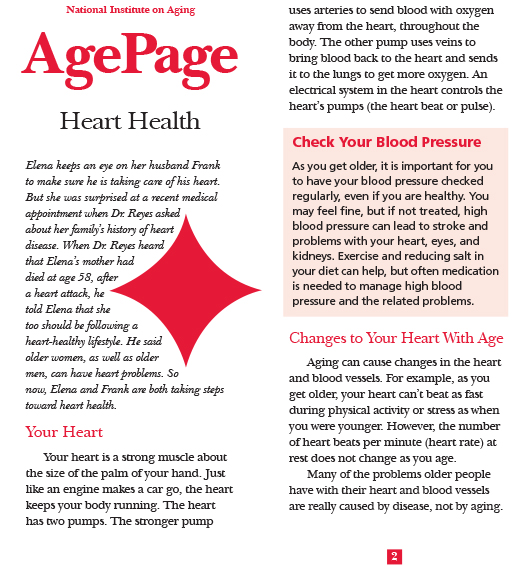
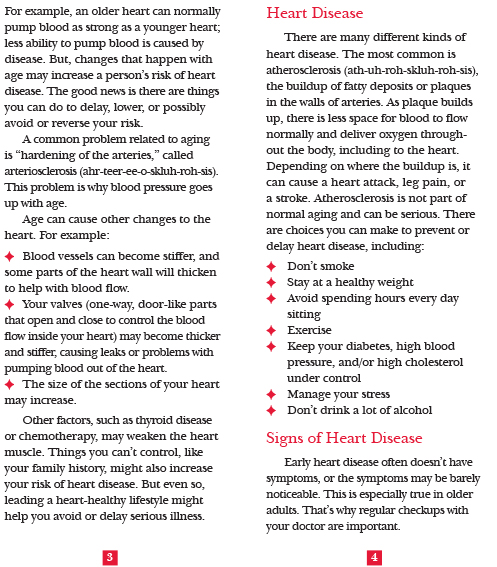
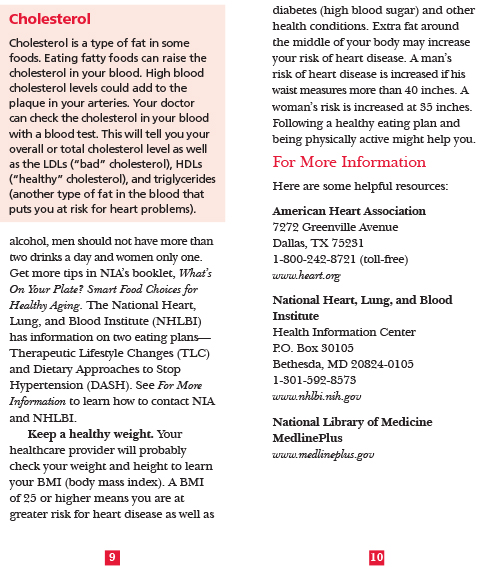
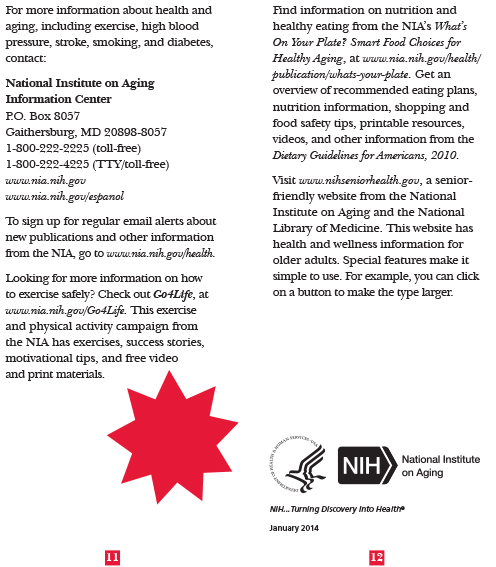

Three out of four U.S. adults have a predicted “heart age” that is older than they are, putting them at increased risk for heart attacks and strokes, government researchers said on Tuesday.
“Your heart may be older than you are. For most adults in the United States, it is,” said Dr. Thomas Frieden, director of the U.S. Centers for Disease Control and Prevention, which released the first study to provide population-level estimates of heart age nationwide.
The CDC calculates heart age based on cardiovascular risk factors including smoking, hypertension, diabetes and obesity.
“It gives a simple risk calculation for having or dying of heart attack or stroke,” Frieden said.
For the report, CDC researchers gathered used risk factor data collected from every U.S. state as well as information from a large, ongoing heart study.
They found that nearly 69 million adults between the ages of 30 and
74 have a heart age older than their actual age.
The report also showed significant differences based on gender and other factors.
For example, the average heart age for adult men is 8 years older than their chronological age, compared to 5 years older for women.
The study found disparities between heart age and chronological age for all racial and ethnic groups, but they were highest among African- American men and women, whose heart age was 11 years older than their actual age for both genders.
The study also found geographical differences in average heart age, with individuals in the Southern United States having higher heart ages than other regions of the country.
States with the highest percentage of adults with a heart age 5 years or more older than their actual age included Mississippi, West Virginia, Kentucky, Louisiana and Alabama. Those with the lowest percentage of adults with heart ages that exceeded their actual age by more than
5 years included Utah, Colorado, California, Hawaii and Massachusetts.
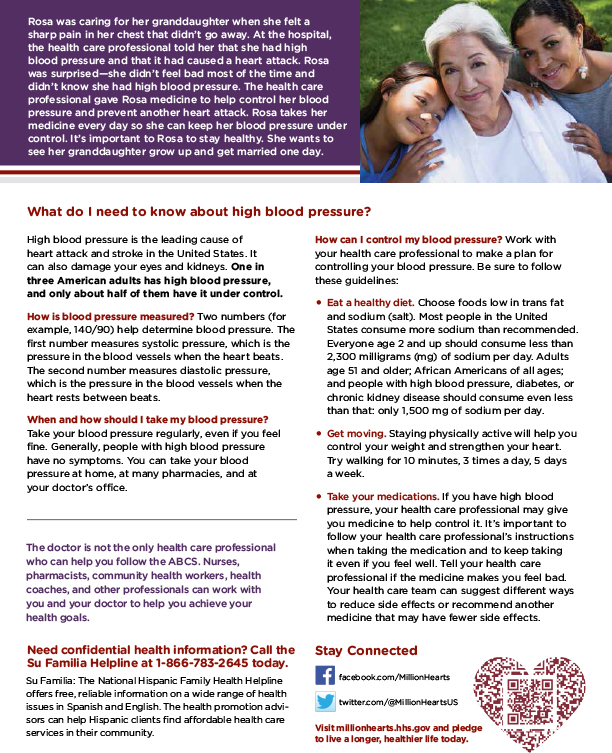
Although individuals may be concerned to learn that their heart age was years older than their actual age, Frieden said the numbers can be improved by reducing one or two cardiovascular risk factors, such as stopping smoking or controlling high blood pressure.
“It is never too late to turn back the clock on your heart age, Frieden said.
(Reporting by Julie Steenhuysen; Editing by Bernard Orr)
http://www.reuters.com/article/2015/09/01/us-‐usa-‐health-‐heart-‐study-‐
idUSKCN0R14DT20150901
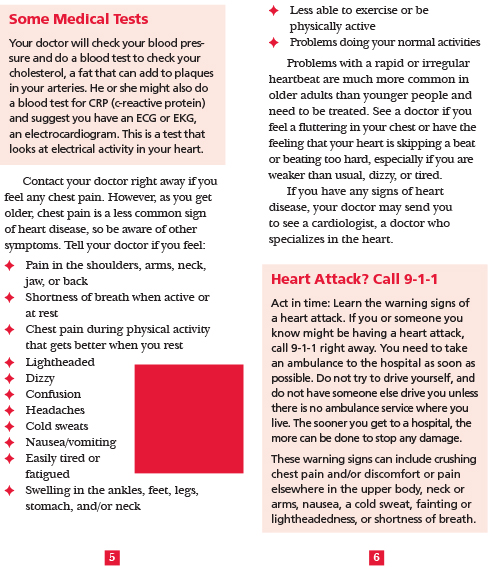
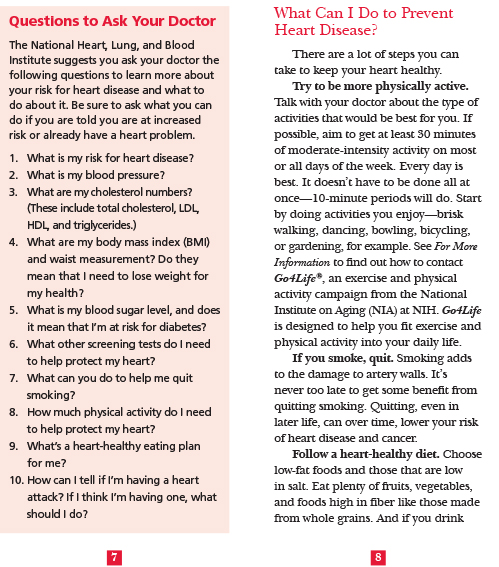
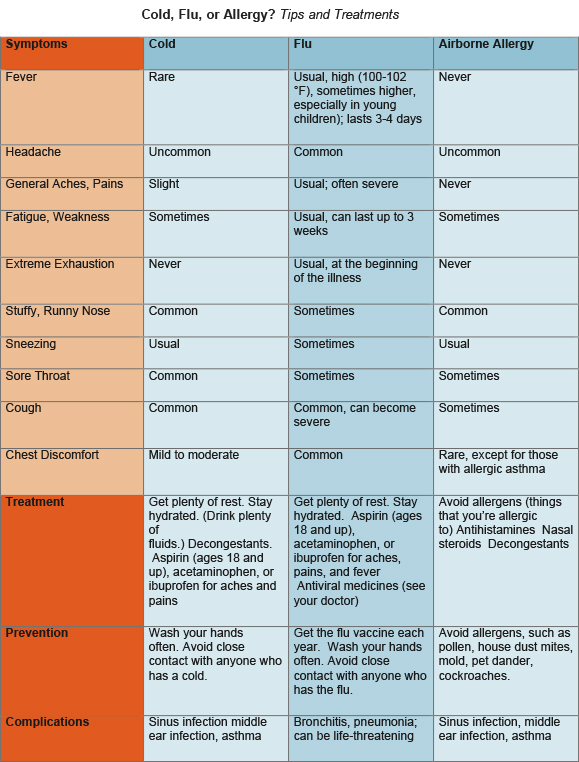
You’re feeling pretty lousy. You’ve got sniffles, sneezing, and a sore throat. Is it a cold, flu, or allergies? It can be hard to tell them apart because they share so many symptoms. But understanding the differences will help you choose the best treatment.
“If you know what you have, you won’t take medications that you don’t need, that aren’t effective, or that might even make your symptoms worse,” says NIH’s Dr. Teresa Hauguel, an expert on infectious diseases that
affect breathing.
Cold, flu, and allergy all affect your respiratory system, which can make it hard to breathe. Each condition has key symptoms that set them apart.
Colds and flu are caused by different viruses. “As a rule of thumb, the symptoms associated with the flu are more severe,” says Hauguel. Both illnesses can lead to a runny, stuffy nose; congestion; cough; and sore throat. But the flu can also cause high fever that lasts for 3-4 days, along with a headache, fatigue, and general aches and pain. These symptoms are less common when you have a cold.
“Allergies are a little different, because they aren’t caused by a virus,” Hauguel explains. “Instead, it’s your body’s immune system reacting to a trigger, or allergen, which is something you’re allergic to.” If you have allergies and breathe in things like pollen or pet dander, the immune cells in your nose and airways may overreact to these harmless substances. Your delicate respiratory tissues may then swell, and your nose may become stuffed up or runny.
“Allergies can also cause itchy, watery eyes, which you don’t normally have with a cold or flu,” Hauguel adds.
Allergy symptoms usually last as long as you’re exposed to the allergen, which may be about 6 weeks during pollen seasons in the spring, summer, or fall. Colds and flu rarely last beyond 2 weeks.
Most people with a cold or flu recover on their own without medical care. But check with a health care provider if symptoms last beyond 10 days or if symptoms aren’t relieved by over-the-counter medicines. For more about when to see a doctor, go to CDC’s Flu Page .
To treat colds or flu, get plenty of rest and drink lots of fluids. If you have the flu, pain relievers such as aspirin, acetaminophen, or ibuprofen can reduce fever or aches. Allergies can be treated with antihistamines or decongestants. See the “Wise Choices” box for more details.
Be careful to avoid “drug overlap” when taking medicines that list 2 or more active ingredients on the label. For example, if you take 2 different drugs that contain acetaminophen—one for a stuffy nose and the other for headache—you may be getting too much acetaminophen.
“Read medicine labels carefully—the warnings, side effects, dosages. If you have questions, talk to your doctor or pharmacist, especially if you have children who are sick,” Hauguel says. “You don’t want to overmedicate, and you don’t want to risk taking a medication that may interact with another.”
Get your personalized nutrition and physical activity plan. Track your foods and physical activities to see how they stack up. Get tips and support to help you make healthier choices and plan ahead. https://www.supertracker.usda.gov.
You can:

On June 11, 2015, the Obama Administration launched the “Healthy Self” campaign that represents a joint effort between the White House, the Department of Health and Human Services (HHS), including the Surgeon General, to promote healthy living (see http://www.hhs.gov/blog/2015/06/11/invest-your-healthy-self.html).
The Resource Center is committed to sharing information about community events throughout the year to educate employees about preventive actions they can take to stay healthy and well. That includes healthy eating, leading a tobacco-free and drug-free lifestyle, taking care of emotional and mental well-being, and of course – taking advantage of TRC’s offerings aimed at improving your health.
Commit to making your health a priority and join the Healthy Self campaign today, by posting a “Healthy Selfie” on social media. It could be a shot of you working out; choosing a salad or fruit over less healthy options; bypassing the elevators to take the stairs; or heading into the doctor’s office for a checkup. Take a selfie of anything that conveys your commitment to your healthy self, and that may motivate your friends and co-workers to follow your lead.
We all deserve to live healthy, secure lives – not just for ourselves, but for our families and loved ones as well. Spread the word on the Healthy Self campaign, post a Healthy Selfie, and invest in your own health and well-being. It’s an investment we can all afford to make!
For all TRC employees: If you post a Healthy Selfie to The Resource Center’s Facebook page (or your own Facebook page), you will be entered into a drawing in which 5 individuals to receive a healthy lunch delivered to their work site.
The drawing will be held the end of June, so post your Healthy Selfie. Send Tess (tess.kerzner@resourcecenter.org) a link to your post or a copy of your post! The above picture is Tess’ Selfie that she posted. Tess has committed to walking her dog, Isaac, every day for her own health and for his! What about you?
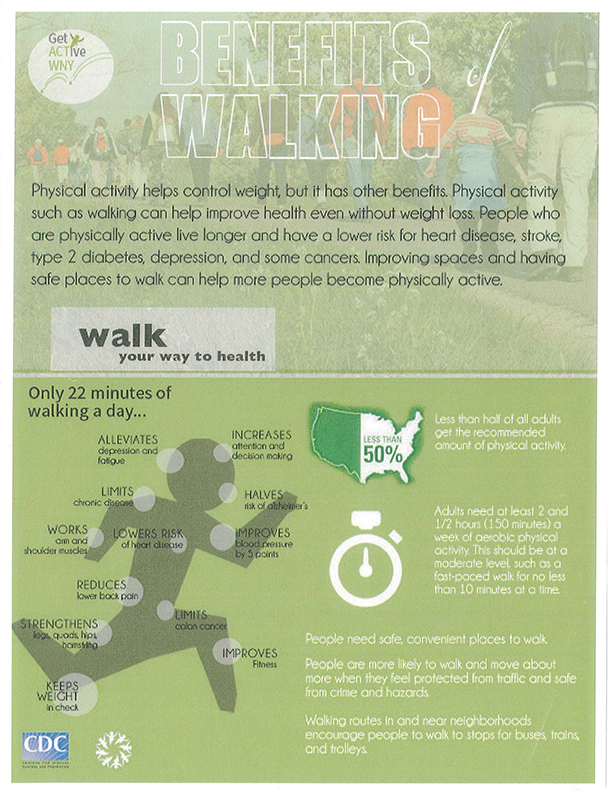
You can boost your creativity at work by getting up from your desk and taking a walk instead of sitting at your desk with your writer’s block.
A study published last year in the Journal of Experimental Psychology (http://psycnet.apa.org/psycinfo/2014-14435-001/ ) demonstrated that walking can boost your creativity level. Now is the season to head outside and practice problem solving one step at a time! Walking opens up the free flow of ideas, and it is a simple and robust solution to the goals of boosting creativity and increasing physical activity.

 TRC STARS/SAFER