Wellness Wednesday – Volume 2 – Week 46

Now that we have all “gobbled ‘till we wobbled”,  it’s time to get back on track to healthy eating habits and maintaining lifestyle practices that promote a beneficial outcome for our TRC family.  Our Wellness Wednesday tips come to us this week from our friends at Weight Watchers…

November is National Diabetes Awareness month.  Did you know that almost 30 million Americans have diabetes and an additional 86 million have prediabetes?

Since this disease is so common, and in many cases weight related, this week’s Wellness Wednesday features diabetes-related content to help you better understand the disease, how to prevent it, and/or reduce complications.

First, we begin with advice from the Mayo Clinic.  In Diabetes prevention: 5 tips for taking control, you’ll find key lifestyle changes that can help keep diabetes in check.

Second, if you have been diagnosed as prediabetic and wonder what your daily food choices should be, read I’m Prediabetic: What Do I Eat? for general guidelines about when and what to eat.

Third, for a diabetes-friendly recipe, consider trying Weight Watchers’  Sautéed Flounder with Mint and Tomatoes which combines mild-tasting flounder with fresh tomatoes, fresh mint, and basil for a delicious dish that’s only 2 SmartPoints per serving.

Wellness Wednesday – Volume 2 – Week 37

TIS THE SEASON OF……..…….APPLES!!!!!!!!!!!!!!!!!!!!!!!!!!!!

McIntosh, Cortland, Red Delicious, Pink Lady, Braeburn, Empire, Gala, Fuji, Spy, Crabapples, Pippin, Granny Smith:  there’s such a large variety of apples to suit everyone’s tastes.  In addition to the large number of varieties, there are also a large number of vitamins and nutrients that truly support the old saying, “an apple a day keeps the doctor away.”

Following is an article from Fit Day that discusses the nutritional benefits of apples.  Also, there are several recipes that utilize this nutritious fruit found below.

FIT DAY

Although it might look like a simple piece of fruit, there’s a lot more to an apple than meets the eye. Apples are a good source of a variety of vitamins and minerals. Studies have also established an association between apple consumption and numerous health benefits. An apple a day will do a lot more than just keep the doctor away.

Vitamins and Minerals in Apples

Apples are full of healthy antioxidants, fiber, vitamins and minerals. One medium sized apple contains 95 calories and 4.4 g of dietary fiber. In addition, an apple is a good source of potassium, phosphorus, calcium, manganese, magnesium, iron and zinc. Apples also contain vitamins A, B1, B2, B6, C, E, K, folate, and niacin. Apples come in different shapes and sizes, so the amount of calories and vitamins in 1 apple varies. Best of all, apples contain no fat, sodium or cholesterol.

Anti-Carcinogenic Properties

Studies suggest apples might even work to fight cancer. In fact, the average medium sized apple contains more cancer fighting antioxidants than a large dose of vitamin C. In addition, apples contain other cancer fighting agents, including phytochemicals and phytonutrients. Phytonutrients help lower LDL or bad cholesterol. By lowering your LDL cholesterol, you reduce your likelihood of developing heart disease. Antioxidants fight cancer causing free radicals that damage healthy cells and promote the growth of cancerous cells.

Apples and Appetite Control

Every dieter should be sure to eat enough fiber every day. Fiber helps you control your appetite by making you feel full and satisfied. If you don’t eat enough fiber, you might feel hungrier in between meals and over consume high calorie foods during the day. Apples contain pectin, which is a form of fiber. When you think of fiber, you might immediately think of germ and bran. But don’t underestimate the amount of fiber in an apple. You might be surprised to learn an apple contains the same amount of dietary fiber as a serving of bran cereal! Many health experts recommend those struggling with obesity to eat an apple everyday as an easy and practical way to control their appetite and lose weight. Pectin also helps keep your digestive system regular by removing toxins and other harmful substances from your body.

Sugar Content of Apples

Although sweet apples do contain sugar, there’s a distinction between the sugar found in apples and the sugar found in processed candies. The energy you get from eating an apple is more sustained than the energy you get from eating white table sugar. This is because apples contain complex carbohydrates, which don’t cause a dramatic spike in blood sugar.

If you’re looking for a sweet snack that won’t wreck your diet, an apple might be just what you’re looking for. Apples might make the perfect substitute for candy or soda. To fight off midday hunger pains, you could enjoy an apple with a tall glass of water.

(This article is directly from Fit Day)

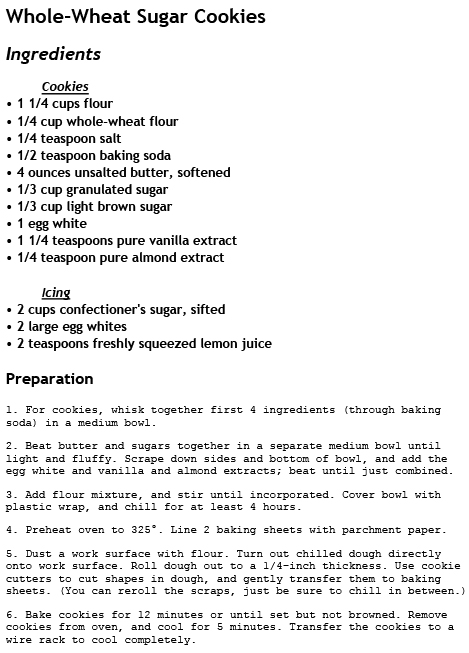
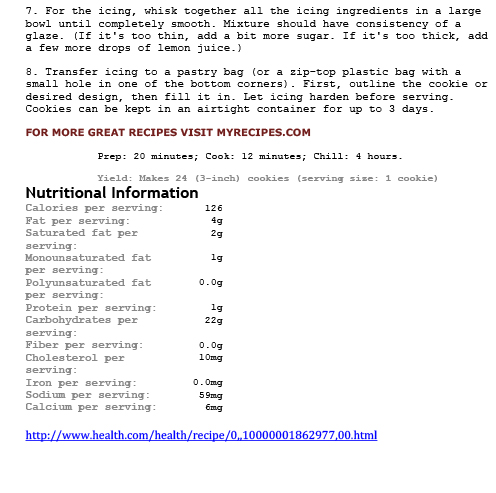
Dutch Apple Yogurt Dessert | What's Cooking? USDA Mixing Bowl

Peach Apple Crisp | What's Cooking? USDA Mixing Bowl

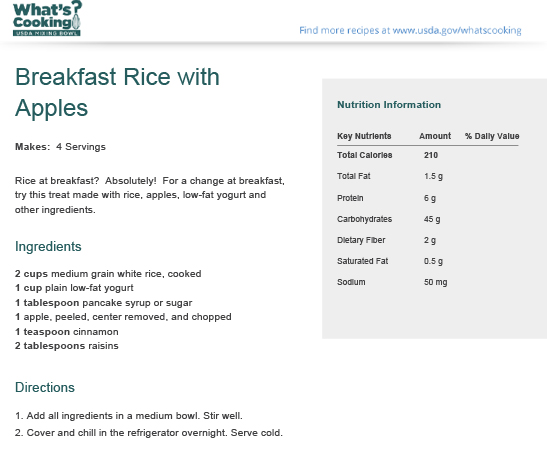
Breakfast Rice with Apples | What's Cooking? USDA Mixing Bowl

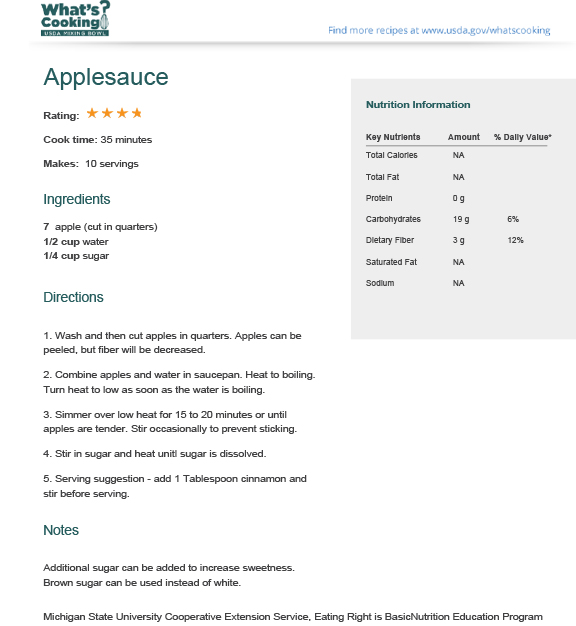
Applesauce | What's Cooking? USDA Mixing Bowl

Wellness Wednesday – Volume 2 – Week 31

Choosemyplate.gov – A Great Resource

In today’s day and age, there are various opinions and principles surrounding weight loss, nutritious eating and exercise. We have access to a phenomenal resource right at our fingertips. ChooseMyPlate.gov is an online resource from the USDA Center for Nutrition. ChooseMyPlate.gov focuses on making small life style changes to eat healthier and to increase physical activity. It is geared for adults, children, professionals, and families and is jam packed full of online resources, tips and suggestions for today’s person who is looking for direction in making a lifestyle change and taking control of what they are eating and drinking. Included in this website are ideas, pictures, graphs and recipes to help those who are not quite sure how to start. It also reviews the food pyramid and explains what is needed in each food category to comprise a well-balanced meal.

For example, this week, ChooseMyPlate.gov sent an email that gives tips and trick on how to eat healthy on a budget (see links below). All the resources needed to accomplish this are available on the website. This week’s Wellness Wednesday is geared toward getting you to the ChooseMyPlate.gov website and utilizing all that it has to offer.

Attached to this page are four links (1 is the direct link to the site, the other 3 are the links to the weekly topic of eating healthy on a budget):
1. ChooseMyPlate.gov
2. 2 week menu plan
3. Grocery list (for 2 week menu plan)
4. Recipes (for 2 week menu plan)

Take some time and look through ChooseMyPlate.gov. It has a wealth of information to get you started on a path to healthier living!!!!!!!

Wellness Wednesday – Week 40

How to Eat a Healthy Meal Just About Anywhere

Traveling almost always means eating on the road or in the air. And that can mean making some nutritional sacrifices. But when the only option for lunch is a random gas station, it doesn’t have to mean that a balanced meal is completely off the table. In fact, it’s possible to find nutritious food options at airports, bodegas, fast food restaurants, and yes, even gas stations.

A few basic guidelines can help you stay on track: Go crazy with the veggies whenever possible. Try to achieve a stay-full-longer balance of protein and fiber. And keep an eye on portion sizes, especially at sit-down restaurants. Still need some guidance? Here are my favorite picks to have a healthy meal wherever you are.

Fast Food – With even the major hamburger chains selling decent veggie burgers and salads these days, it’s easier than ever to find reasonably nutritious fast food. My favorite combo: a small, no-frills burger or chicken sandwich with veggie toppings like lettuce, tomato, and pickles, plus a side salad. At joints like Taco Bell, I’ll go for a bean-and-cheese burrito, and at places like Panda Express I’ll get a rice bowl with veggies and chicken. These choices have a good combination of protein and fiber to keep you full longer.

Bodegas – Most bodegas have deli counters and can make surprisingly well- balanced sandwiches. While you may not be able to find whole-grain bread everywhere, you can generally get a full serving of veggies — just ask for a nice big handful of lettuce and tomato, plus any pickles or other vegetable toppings that look good to you. And if they don’t pile the meat and cheese too high (two to three thin deli slices and one piece of cheese is typically enough to satisfy), you won’t be OD’ing on sodium. If the best option is a baguette or long roll, I aim for about a 6- inch sandwich.

Gas Stations – While it can still sometimes be tough to find anything resembling a fruit or vegetable at some gas stations, increasing numbers of them have refrigerator cases stocked with fresh food, including some halfway decent salads. On a recent road trip, I assembled a surprisingly satisfying, high-fiber lunch from a gas station, including a single-serving hummus-and-pretzel cup, a fruit salad cup, and some not-overly-processed beef jerky. Other gas stations have nice selections of dried fruit, jarred salsa, and high-fiber multigrain chips — not to mention the usual standbys of nuts, trail mix, and granola bars.

Grocery Stores – Compared to some of the other places on this list, grocery stores are a piece of cake. Many have prepared food buffets, where you can find a variety of raw and cooked veggies, meat and vegetarian protein options, and grain-based salads. A good rule of thumb for portioning at these buffets: Fill half the container with veggies, then top with a serving of protein about the size of your palm, and a serving of grain/starch about the size of your fist. If your grocery store only has a deli counter, you can apply the same guidelines as you would in a bodega: a pile of veggies, and a few slices of meat and cheese. I also love a DIY picnic — try fresh-baked bread, a nice piece of cheese, some easy-to- eat fruit, and cut veggies with salsa or hummus for dipping.

Pharmacies – Like gas stations, many of the major pharmacy chains now also have refrigerator cases selling sandwiches and salads. Look for a balance of protein, veggies, and starch (say, for example, a salad with chicken, a colorful mix of greens and tomatoes, and a handful of croutons). If it’s breakfast time you can usually find yogurt, a fruit-and-nut bar, or a smoothie. Even pharmacies that don’t have refrigerator cases will usually still have a small grocery section where you can find nuts and other snacks as you would in gas stations and bodegas, but one unique thing about pharmacies is the nutritional supplement shakes, which are great for breakfast or a snack in a pinch. I stick to the varieties sweetened
with sugar instead of artificial sweeteners, which have been shown to alter the normal makeup of the intestinal microbiome. It’s best to keep your daily consumption of added sugars under about 25-30g, but these shakes can fit in nicely if you think of them as your main sweet treat for the day.

Fast-Casual Restaurants – Many of these types of restaurants serve portions big enough for two to three meals, and if you’re not supremely attuned to your hunger and fullness cues, it can be pretty overwhelming. But here’s an easy trick to get a good serving size for one meal: Ask for an extra plate, and serve yourself a portion of starch that’s about the size of your fist, a portion of veggies that’s twice that size, and a portion of protein that’s about the size of your palm.

Eat that extra-plate meal first, taking breaks to talk with your tablemates and sip some water, and then see how you feel. If you’re satisfied, box up the leftovers to take home; if not, serve yourself a second, smaller portion and then check in with your fullness again.

By Christy Harrison, MHP, RD, CDN

https://www.yahoo.com/food/healthy-­meals-­that-­are-­totally-­unexpected-­120747582.html