







Sleep plays a vital role in good health and well-being throughout your life. Getting enough quality sleep at the right times can help protect your mental health, physical health, quality of life, and safety.
The way you feel while you’re awake depends in part on what happens while you’re sleeping. During sleep, your body is working to support healthy brain function and maintain your physical health. In children and teens, sleep also helps support growth and development.
The damage from sleep deficiency can occur in an instant (such as a car crash), or it can harm you over time. For example, ongoing sleep deficiency can raise your risk for some chronic health problems. It also can affect how well you think, react, work, learn, and get along with others.
Healthy Brain Function and Emotional Well-Being
Sleep helps your brain work properly. While you’re sleeping, your brain is preparing for the next day. It’s forming new pathways to help you learn and remember information.
Studies show that a good night’s sleep improves learning. Whether you’re learning math, how to play the piano, how to perfect your golf swing, or how to drive a car, sleep helps enhance your learning and problem-solving skills. Sleep also helps you pay attention, make decisions, and be creative.
Studies also show that sleep deficiency alters activity in some parts of the brain. If you’re sleep deficient, you may have trouble making decisions, solving problems, controlling your emotions and behavior, and coping with change. Sleep deficiency also has been linked to depression, suicide, and risk-taking behavior.
Children and teens who are sleep deficient may have problems getting along with others. They may feel angry and impulsive, have mood swings, feel sad or depressed, or lack motivation. They also may have problems paying attention, and they may get lower grades and feel stressed.
Physical Health
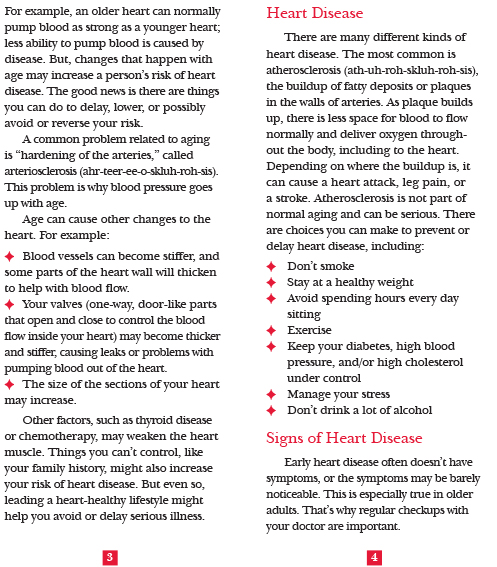
Sleep plays an important role in your physical health. For example, sleep is involved in healing and repair of your heart and blood vessels. Ongoing sleep deficiency is linked to an increased risk of heart disease, kidney disease, high blood pressure, diabetes, and stroke.
Sleep deficiency also increases the risk of obesity. For example, one study of teenagers showed that with each hour of sleep lost, the odds of becoming obese went up. Sleep deficiency increases the risk of obesity in other age groups as well.
Sleep helps maintain a healthy balance of the hormones that make you feel hungry (ghrelin) or full (leptin). When you don’t get enough sleep, your level of ghrelin goes up and your level of leptin goes down. This makes you feel hungrier than when you’re well-rested.
Sleep also affects how your body reacts to insulin, the hormone that controls your blood glucose (sugar) level. Sleep deficiency results in a higher than normal blood sugar level, which may increase your risk for diabetes.
Sleep also supports healthy growth and development. Deep sleep triggers the body to release the hormone that promotes normal growth in children and teens. This hormone also boosts muscle mass and helps repair cells and tissues in children, teens, and adults. Sleep also plays a role in puberty and fertility.
Your immune system relies on sleep to stay healthy. This system defends your body against foreign or harmful substances. Ongoing sleep deficiency can change the way in which your immune system responds. For example, if you’re sleep deficient, you may have trouble fighting common infections.
Daytime Performance and Safety
Getting enough quality sleep at the right times helps you function well throughout the day. People who are sleep deficient are less productive at work and school. They take longer to finish tasks, have a slower reaction time, and make more mistakes.
After several nights of losing sleep—even a loss of just 1–2 hours per night—your ability to function suffers as if you haven’t slept at all for a day or two.
Lack of sleep also may lead to microsleep. Microsleep refers to brief moments of sleep that occur when you’re normally awake.
You can’t control microsleep, and you might not be aware of it. For example, have you ever driven somewhere and then not remembered part of the trip? If so, you may have experienced microsleep.
Even if you’re not driving, microsleep can affect how you function. If you’re listening to a lecture, for example, you might miss some of the information or feel like you don’t understand the point. In reality, though, you may have slept through part of the lecture and not been aware of it.
Some people aren’t aware of the risks of sleep deficiency. In fact, they may not even realize that they’re sleep deficient. Even with limited or poor-quality sleep, they may still think that they can function well.
For example, drowsy drivers may feel capable of driving. Yet, studies show that sleep deficiency harms your driving ability as much as, or more than, being drunk. It’s estimated that driver sleepiness is a factor in about 100,000 car accidents each year, resulting in about 1,500 deaths.
Drivers aren’t the only ones affected by sleep deficiency. It can affect people in all lines of work, including health care workers, pilots, students, lawyers, mechanics, and assembly line workers.
As a result, sleep deficiency is not only harmful on a personal level, but it also can cause large-scale damage. For example, sleep deficiency has played a role in human errors linked to tragic accidents, such as nuclear reactor meltdowns, grounding of large ships, and aviation accidents.
http://www.nhlbi.nih.gov/health/health-topics/topics/sdd/why
Three out of four U.S. adults have a predicted “heart age” that is older than they are, putting them at increased risk for heart attacks and strokes, government researchers said on Tuesday.
“Your heart may be older than you are. For most adults in the United States, it is,” said Dr. Thomas Frieden, director of the U.S. Centers for Disease Control and Prevention, which released the first study to provide population-level estimates of heart age nationwide.
The CDC calculates heart age based on cardiovascular risk factors including smoking, hypertension, diabetes and obesity.
“It gives a simple risk calculation for having or dying of heart attack or stroke,” Frieden said.
For the report, CDC researchers gathered used risk factor data collected from every U.S. state as well as information from a large, ongoing heart study.
They found that nearly 69 million adults between the ages of 30 and
74 have a heart age older than their actual age.
The report also showed significant differences based on gender and other factors.
For example, the average heart age for adult men is 8 years older than their chronological age, compared to 5 years older for women.
The study found disparities between heart age and chronological age for all racial and ethnic groups, but they were highest among African- American men and women, whose heart age was 11 years older than their actual age for both genders.
The study also found geographical differences in average heart age, with individuals in the Southern United States having higher heart ages than other regions of the country.
States with the highest percentage of adults with a heart age 5 years or more older than their actual age included Mississippi, West Virginia, Kentucky, Louisiana and Alabama. Those with the lowest percentage of adults with heart ages that exceeded their actual age by more than
5 years included Utah, Colorado, California, Hawaii and Massachusetts.
Although individuals may be concerned to learn that their heart age was years older than their actual age, Frieden said the numbers can be improved by reducing one or two cardiovascular risk factors, such as stopping smoking or controlling high blood pressure.
“It is never too late to turn back the clock on your heart age, Frieden said.
(Reporting by Julie Steenhuysen; Editing by Bernard Orr)
http://www.reuters.com/article/2015/09/01/us-‐usa-‐health-‐heart-‐study-‐
idUSKCN0R14DT20150901
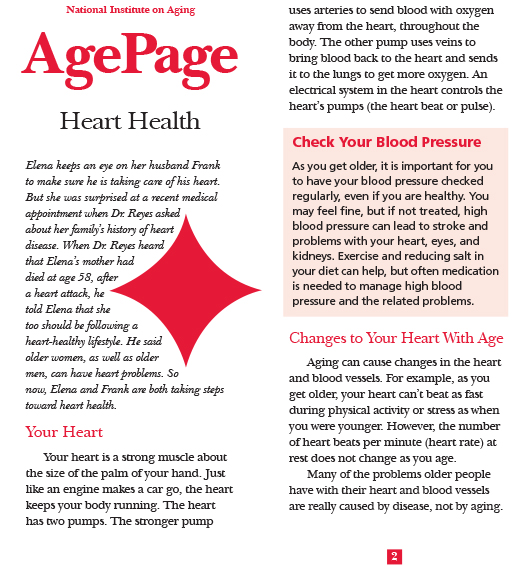
How’s your cholesterol? Time to get it checked!
Keeping your cholesterol levels healthy is a great way to keep your heart healthy – and lower your chances of getting heart disease or having a stroke. But first, you have to know your cholesterol numbers. The American Heart Association recommends all adults age 20 or older have their cholesterol, and other traditional risk factors, checked every four to six years.
Your test report will show your cholesterol levels in milligrams per deciliter of blood (mg/dL). Your total cholesterol and HDL (good) cholesterol are among numerous factors your doctor can use to predict your lifetime or 10-year risk for a heart attack or stroke.
To determine how your cholesterol levels affect your risk of heart disease, your doctor will also take into account other risk factors such as age, family history, smoking and high blood pressure.
A complete fasting lipoprotein profile will show the following for:
Total blood (or serum) cholesterol Your total cholesterol score is calculated using the following equation: HDL + LDL + 20 percent of your triglyceride level.
HDL (good) cholesterol With HDL cholesterol, higher levels are better. Low HDL cholesterol puts you at higher risk for heart disease. People with high blood triglycerides usually also have lower HDL cholesterol. Genetic factors, type 2 diabetes, smoking, being overweight and being sedentary can all result in lower HDL cholesterol.
LDL (bad) cholesterol A low LDL cholesterol level is considered good for your heart health. However, your LDL number should no longer be the main factor in guiding treatment to prevent heart attack and stroke, according to new guidelines from the American Heart Association. For patients taking statins, the guidelines say they no longer need to get LDL cholesterol levels down to a specific target number. A diet high in saturated and trans fats raises LDL cholesterol.
Triglycerides Triglyceride is the most common type of fat in the body. Normal triglyceride levels vary by age and sex. A high triglyceride level combined with low HDL cholesterol or high LDL cholesterol is associated with atherosclerosis, the buildup of fatty deposits in artery walls that increases the risk for heart attack and stroke.
AHA Recommendation We recommend that all adults age 20 or older have their cholesterol and other traditional risk factors checked every four to six years, and work with their healthcare providers to determine their risk for cardiovascular disease and stroke.
Source – http://www.heart.org/HEARTORG/Conditions/What-Your-Cholesterol-Levels-Mean_UCM_305562_Article.jsp
Even if you think you know everything there is to know about cholesterol, there may be a few more surprises in store. Check out these common myths about high cholesterol; find out whos most likely to have it, what types of food can cause it, and why—sometimes— cholesterol isn’t a bad word.
Myth 1: Americans have the highest cholesterol in the world
One of the world’s enduring stereotypes is the fat American with cholesterol-‐clogged
arteries who is a Big Mac or two away from a heart attack. As a nation, we could certainly use some slimming down, but when it comes to cholesterol levels we are solidly middle-‐of-‐ the-‐road.
According to 2005 World Health Organization statistics, American men rank 83rd in the world in average total cholesterol, and American women rank 81st; in both cases, the average number is 197 mg/dL, just below the Borderline-‐High Risk category. That is very respectable compared to the top-‐ranked countries: In Colombia the average cholesterol among men is a dangerous 244, while the women in Israel, Libya, Norway, and Uruguay are locked in a four-‐way tie at 232.
Myth 2: Eggs are evil
It’s true that eggs have a lot of dietary cholesterol—upwards of 200 mg, which is more than
two-‐thirds of the American Heart Association’s recommended limit of 300 mg a day. But dietary cholesterol isn’t nearly as dangerous as was once thought. Only some of the cholesterol in food ends up as cholesterol in your bloodstream, and if your dietary cholesterol intake rises, your body compensates by producing less cholesterol of its own.
While you don’t want to overdo it, eating an egg or two a few times a week isn’t dangerous.
In fact, eggs are an excellent source of protein and contain unsaturated fat, a so-‐called good
fat.
Myth 3: Kids can’t have high cholesterol
Most people think high cholesterol is a problem that’s strictly for the middle-‐aged. But guess what? Research has shown that atherosclerosis—the narrowing of the arteries that leads to heart attacks—can start as early as age eight. In July 2008, the American Academy of Pediatrics released guidelines on kids and cholesterol that recommended that children who are overweight, have hypertension, or have a family history of heart disease have their cholesterol tested as young as two years of age.
Children with high cholesterol should be on a diet that restricts saturated fat to 7% of
calories and no more than 200 mg per day of dietary cholesterol, according to the
guidelines. Fiber supplements and more exercise are also recommended.
While the guidelines prompted a bit of an outcry from parents worried that doctors would be pushing cholesterol-‐lowering drugs for kids, a new study suggests that less than 1% of adolescents aged 12 to 17 would be considered candidates for medication.
Myth 4: Food is heart-healthy if it says “0 mg cholesterol”
The Cholesterol portion of the nutritional label refers to dietary cholesterol, which is only one of the things found in food that can cause your cholesterol to go sky-‐high. (A bigger contributor to elevated cholesterol? A high-‐fat diet.) It’s also believed to be the least important. Saturated fat (found in animal foods and dairy products) and trans fats (found in packaged foods) appear to have a far greater impact on low-‐density lipoprotein (LDL), the so-‐called bad cholesterol that causes atherosclerosis, than dietary cholesterol.
Myth 5: Cholesterol is always a bad thing
When most people hear “cholesterol” they think “bad.” Like most things in life, the reality is more complex. High cholesterol can be dangerous, but cholesterol itself is essential to various bodily processes, from insulating nerve cells in the brain to providing structure for cell membranes. That’s why your body makes the white, waxy substance (about 75% of the cholesterol in your blood is made by the liver and cells elsewhere in your body).
The role of cholesterol in heart disease is often misunderstood. Cholesterol is carried through the bloodstream by low-‐density and high-‐density lipoproteins (LDL and HDL). LDL, known as bad cholesterol, and not the cholesterol it carries per se, is responsible for atherosclerosis.
http://www.health.com/health/condition-‐article/0,,20259746_2,00.html