Wellness Wednesday – Volume 2 – Week 37

TIS THE SEASON OF……..…….APPLES!!!!!!!!!!!!!!!!!!!!!!!!!!!!

McIntosh, Cortland, Red Delicious, Pink Lady, Braeburn, Empire, Gala, Fuji, Spy, Crabapples, Pippin, Granny Smith:  there’s such a large variety of apples to suit everyone’s tastes.  In addition to the large number of varieties, there are also a large number of vitamins and nutrients that truly support the old saying, “an apple a day keeps the doctor away.”

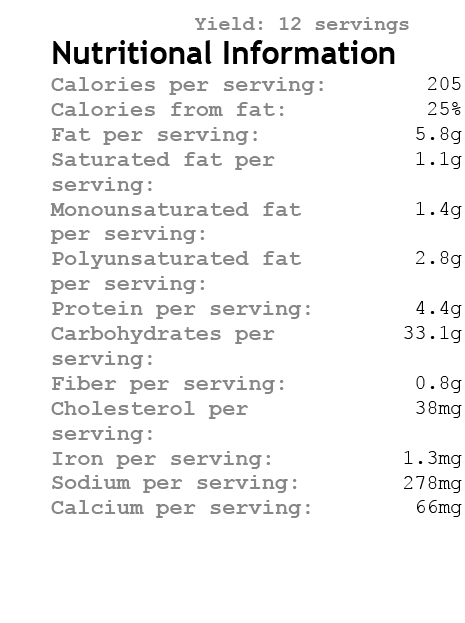
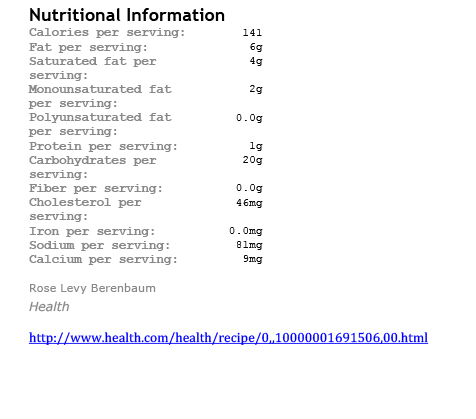
Following is an article from Fit Day that discusses the nutritional benefits of apples.  Also, there are several recipes that utilize this nutritious fruit found below.

FIT DAY

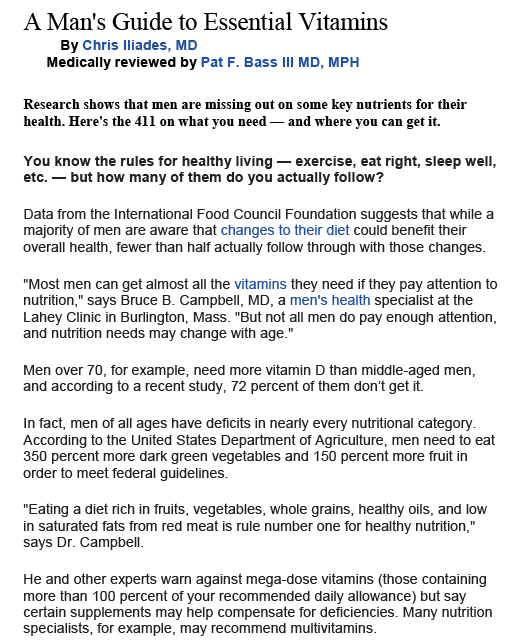
Although it might look like a simple piece of fruit, there’s a lot more to an apple than meets the eye. Apples are a good source of a variety of vitamins and minerals. Studies have also established an association between apple consumption and numerous health benefits. An apple a day will do a lot more than just keep the doctor away.

Vitamins and Minerals in Apples

Apples are full of healthy antioxidants, fiber, vitamins and minerals. One medium sized apple contains 95 calories and 4.4 g of dietary fiber. In addition, an apple is a good source of potassium, phosphorus, calcium, manganese, magnesium, iron and zinc. Apples also contain vitamins A, B1, B2, B6, C, E, K, folate, and niacin. Apples come in different shapes and sizes, so the amount of calories and vitamins in 1 apple varies. Best of all, apples contain no fat, sodium or cholesterol.

Anti-Carcinogenic Properties

Studies suggest apples might even work to fight cancer. In fact, the average medium sized apple contains more cancer fighting antioxidants than a large dose of vitamin C. In addition, apples contain other cancer fighting agents, including phytochemicals and phytonutrients. Phytonutrients help lower LDL or bad cholesterol. By lowering your LDL cholesterol, you reduce your likelihood of developing heart disease. Antioxidants fight cancer causing free radicals that damage healthy cells and promote the growth of cancerous cells.

Apples and Appetite Control

Every dieter should be sure to eat enough fiber every day. Fiber helps you control your appetite by making you feel full and satisfied. If you don’t eat enough fiber, you might feel hungrier in between meals and over consume high calorie foods during the day. Apples contain pectin, which is a form of fiber. When you think of fiber, you might immediately think of germ and bran. But don’t underestimate the amount of fiber in an apple. You might be surprised to learn an apple contains the same amount of dietary fiber as a serving of bran cereal! Many health experts recommend those struggling with obesity to eat an apple everyday as an easy and practical way to control their appetite and lose weight. Pectin also helps keep your digestive system regular by removing toxins and other harmful substances from your body.

Sugar Content of Apples

Although sweet apples do contain sugar, there’s a distinction between the sugar found in apples and the sugar found in processed candies. The energy you get from eating an apple is more sustained than the energy you get from eating white table sugar. This is because apples contain complex carbohydrates, which don’t cause a dramatic spike in blood sugar.

If you’re looking for a sweet snack that won’t wreck your diet, an apple might be just what you’re looking for. Apples might make the perfect substitute for candy or soda. To fight off midday hunger pains, you could enjoy an apple with a tall glass of water.

(This article is directly from Fit Day)

Dutch Apple Yogurt Dessert | What's Cooking? USDA Mixing Bowl

Peach Apple Crisp | What's Cooking? USDA Mixing Bowl

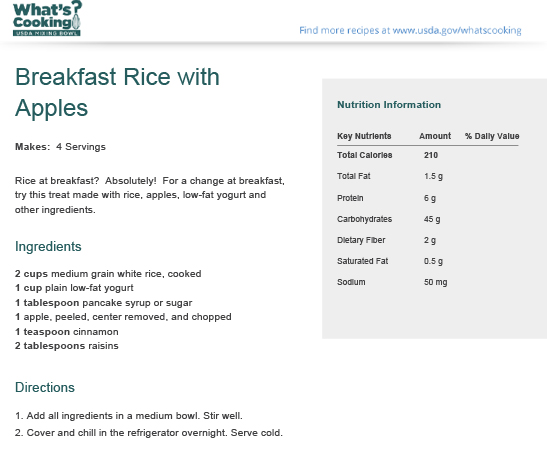
Breakfast Rice with Apples | What's Cooking? USDA Mixing Bowl

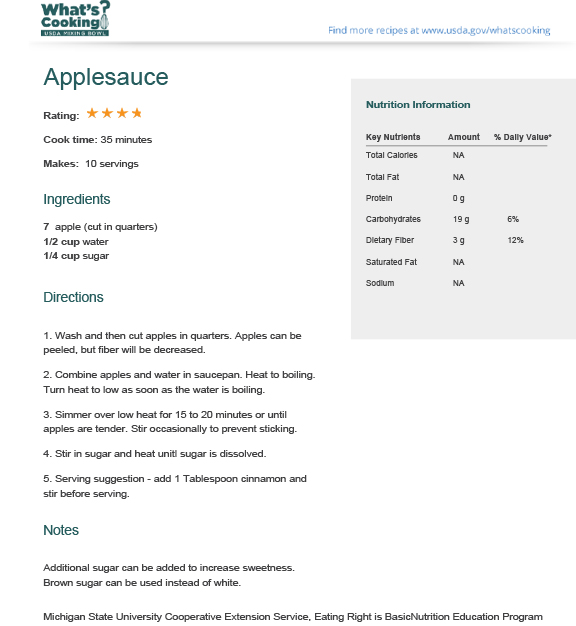
Applesauce | What's Cooking? USDA Mixing Bowl

Wellness Wednesday – Volume 2 – Week 31

Choosemyplate.gov – A Great Resource

In today’s day and age, there are various opinions and principles surrounding weight loss, nutritious eating and exercise. We have access to a phenomenal resource right at our fingertips. ChooseMyPlate.gov is an online resource from the USDA Center for Nutrition. ChooseMyPlate.gov focuses on making small life style changes to eat healthier and to increase physical activity. It is geared for adults, children, professionals, and families and is jam packed full of online resources, tips and suggestions for today’s person who is looking for direction in making a lifestyle change and taking control of what they are eating and drinking. Included in this website are ideas, pictures, graphs and recipes to help those who are not quite sure how to start. It also reviews the food pyramid and explains what is needed in each food category to comprise a well-balanced meal.

For example, this week, ChooseMyPlate.gov sent an email that gives tips and trick on how to eat healthy on a budget (see links below). All the resources needed to accomplish this are available on the website. This week’s Wellness Wednesday is geared toward getting you to the ChooseMyPlate.gov website and utilizing all that it has to offer.

Attached to this page are four links (1 is the direct link to the site, the other 3 are the links to the weekly topic of eating healthy on a budget):
1. ChooseMyPlate.gov
2. 2 week menu plan
3. Grocery list (for 2 week menu plan)
4. Recipes (for 2 week menu plan)

Take some time and look through ChooseMyPlate.gov. It has a wealth of information to get you started on a path to healthier living!!!!!!!

Wellness Wednesday – Week 15

Office snacks may boost morale, but they are also sabotaging your health!

It has been shown that just the sight or smell of candy, cookies, donuts, and the like trigger a desire to eat them.  Since most of us are lugging around some excess body-fat, this kind of morale booster is not helping our diet efforts and is probably inadvertently increasing sick days and perhaps even anxiety, listlessness or moodiness when the resulting sugar rush wears off.

People often think they can work off these snacks with a little extra exercise or activity.  However, just 2 pieces of candy each workday totals about 480 calories and explains why a person weighing 160 pounds would need to walk got 157 minutes; ballroom dance 132 minutes; golf (carrying clubs) 88 minutes; backpack 56 minutes; or run 29 minutes just to burn off those extra calories.

Warning:  You don’t even want to know what it would take to burn off the calories that donuts and cookies contain.  In addition, these sugary treats wreak havoc on your body, spiking insulin levels and making fat burning impossible.   From: Diet & Fat Loss, Men’s Health, TC Lifestyle, Total Health, Women’s Health

Los Angeles nutritionist Jonny Bowden, author of nine books including his most recent, Living Low Carb: Controlled-Carbohydrate Eating for Long Term Weight Loss, writes: “A snack should be a well-constructed mini-meal.  It should be built around adequate protein, a little bit of fat and hopefully some fiber.”  He recommends baking a batch of sweet potatoes and stowing them in the fridge.  “They get sweet and delicious and soft.”  Stuff a little tuna packed in water inside, and pack in a plastic container.  Voila, a tasty mini-meal.

10 Healthy Snacks To Eat At Your Desk

Ideally office snacks should provide 200 calories or less.  But Bowden also recommends even lower-cal choices, like a single hard-boiled egg.  One egg has around 70 calories and is packed with 5 to 6 grams of protein.  Though you should always strive for a balance among fiber, proteins, nutrients, and fats, don’t expect every snack to provide those elements.  Just try to pick a food that’s nutritious and fits in, calorie- and nutrition-wise, with the rest of your diet.
Another snack Bowden loves: half an avocado, which he calls “the unsung hero of the snack kingdom.”  This creamy, green fruit is surprisingly high in fiber, with 9 to 11 grams per avocado.

If you don’t have time to cook sweet potatoes or boil eggs, Bowden recommends some ready-made snacks to grab and stow in your desk drawer.  String cheese, for instance, is high in protein, offers a bit of fat and has only 80 calories.  The Horizon company makes an organic brand that Bowden likes.

Some health bars also make good snacks, Bowden says.  He likes the Lara and Atkins brands.  Lara bars don’t offer protein, but they’re packed with healthy fruit and nuts; Atkins bars have no trans fats, and they’re high in fiber, low in sugar and offer some proteins.  Almonds are another easy, tasty choice to keep on hand.  One ounce, about 12 nuts, has 184 calories and good omega-9 fatty acids, the fat also contained in olive oil that’s associated with heart health.  Almonds also have fiber and protein.

Bowden’s bottom line: Stay away from sugar-rush snacks like chocolate and cookies.  They send your blood sugar soaring, increase your insulin output and signal your kidneys to hold on to sodium.  You may feel a boost in the short term, but in a couple of hours you’ll come crashing down.  You’ll be better off with a balanced mini-meal that keeps your blood sugar steady and contributes to your overall nutrition.

Wellness Wednesday – Week 14

The Power of Almonds

Almonds are high in calories but contain good fats that help reduce bad cholesterol in the blood.  They also curb hunger to ensure that one does not eat too much.  Almonds make a great snack; in addition, they contain vitamin B, magnesium, prosperous, and copper, which are necessary minerals for good health.

For people who are diabetic or pre-diabetic, almonds are good for blood sugar control.  Here’s why:

The Centers for Disease Control estimate that 23.7 million Americans have diabetes and another 54 million Americans have metabolic syndrome or “pre-diabetes.”

Diabetes and pre-diabetes are conditions in which sugar, or glucose, levels in the blood begin to increase. The American Diabetes Association defines a normal fasting blood sugar as less than 100 milligrams per deciliter (mg/dl).  Those with a fasting blood glucose level of greater than 126 mg/dl are suspected of having diabetes, and those with a fasting blood sugar between 100 and 126 mg/dl; as pre-diabetic or insulin resistant.

The good news is that some 60 percent of pre-diabetic individuals can stop the onset of diabetes with a healthy diet and increased activity levels.  Diets with controlled amounts of complex carbohydrates, such as whole grains, fruits and vegetables, are ideal for those with insulin resistance.

Finding wholesome snacks that help to regulate blood sugar levels can often create a challenge for those who are keeping a watchful eye on their diet.  A handful of almonds contains 5 grams of carbohydrates per ounce.  This is one of the reasons why almonds have a low “glycemic index” of 24.5.  Researchers use the glycemic index to rate how quickly the carbohydrates in foods convert into blood sugar.  Foods with a rating of 55 or less are considered low because their carbohydrates trickle slowly into the blood stream.  The slower their rate of entry into the blood stream, the lower their effect upon blood sugar levels and the easier they are for the body to process.  So…. go nuts for Almonds!

According to the USDA:
Just one almond – Calories: 6, Total Fat: 0.61g, Total Carbs: 0.24g, Protein: 0.26g
1 ounce of almonds –  Calories: 164, Total Fat: 14.35g, Total Carbs: 5.65g, Protein: 6.22g
1 cup, whole almonds –  Calories: 826, Total Fat: 72.42g, Total Carbs: 28.23g, Protein: 30.4g
1 cup sliced almonds – Calories: 531, Total Fat: 46.59g, Total Carbs: 18.16g, Protein: 19.56g
Almond butter, no salt 1 tbsp –  Calories: 101, Total Fat: 9.46g, Total Carbs: 3.4g, Protein: 2.41g