Wellness Wednesday – Week 31

Computer & Desk Stretches

Basic recommendations from the American College of Sports Medicine suggest that adults engage in flexibility exercises at least two to three days a week to help improve range of motion, performance, and activities of daily living.

Here are some stretches that can help you follow this recommendation while at work. Stretching can help reduce pain and stiffness caused by sitting at a desk for long periods of time.
Print this worksheet and keep a copy in your drawer, or bookmark this website and add to your favorites for ease of return. These stretches can be done regularly throughout the day about every 30 minutes. In addition it is helpful to take time to get up and walk around regularly.

Sitting Stretch for Upper Body:

Sit upright in your chair and straighten your arms out in front of you with you fingers laced.
You should feel this stretch in your arms and your upper back. Hold stretch for 20 seconds, do at least twice.

Arms/Shoulders/Upper Back Stretch

Interlace your fingers and raise your arms above your head with your palms facing up. To feel the stretch, try to push your arms up and back. You should feel this stretch in your arms, shoulders, and upper back . Hold for 15 seconds. Try to breathe deeply and do not hold your breath.

Shoulder and Side Stretch

Bend your right elbow placing your arm behind your head. Hold right elbow with your left hand. To stretch armpit/shoulder area, move back of head against right arm until mild stretch is felt. Hold for 10-15 seconds. Do both sides. To extend stretch further down your side
and into your hip, bend knees slightly and gently pull your elbow behind your head as you bend
from your hips to the side. Hold for 10 seconds.

Shoulder Blade Pinch

Sit up straight in your chair and relax your shoulders. Place your hands behind head, interlace your fingers, and pull your shoulder blades together. Hold for 4-5 seconds. You should feel this stretch in your shoulders, upper back, and even a little in the pectoral (chest) muscles as your chest moves upwards when you work to squeeze your shoulder blades together. Repeat 3-4 times.

Shoulder Shrug

Start with shoulders relaxed and arms hang-ing to the side. Shrug shoulders up as high as possible without bend-ing your elbows. You should feel slight tension in your neck and shoulders. Hold for 5 seconds. Then, relax your shoulders back down. Repeat 2 – 3 times.

Neck Stretch

With hands behind your back, grab your left wrist with your right hand. Tilt your head to the side to-ward your right shoulder as your right hand pulls your left arm down and across. Hold for 10-15 seconds. Do both sides.

Wrist Flexor Stretch

Similar to previ-ous stretch. Start with arms down in front of you and your palms together with fingers pointing down. Slowly bend elbows bringing your hands upward. Go until you feel a mild stretch in your wrists and fore-arms. Keep your elbows up and even. Hold for 5-8 seconds.

Reaching Upper Body Stretch

Reach in opposite directions with your arms while sitting. Hold for 10 seconds each side. Keep your jaw relaxed and breathe rhythmically. This stretches the sides of the upper body, shoulders, and arms.

Wrist Flexor Stretch

Place your hands together in front of you with fingers up and elbows out. Then, push your hands together and down, keeping your palms together, until you feel a mild stretch in your wrist and forearms. Keep your el-bows up and even. Hold for 5-8 seconds.

Hand Shakes

Shake your arms and hands at your side for 10-12 sec-onds. Keep your jaw re-laxed and let your shoul-ders hang downward as you shake out tension.

Back Extension Stretch

Sitting on the edge of your chair, place your palms on your lower back just above your hips, fingers pointed downward. Gently push your palms forward to create an extension in the lower back. This stretches the lower back and stretch can also be felt in the chest and shoulder area. Hold for 10 seconds. Repeat twice. Use this stretch after sitting for an extended period of time. Do not hold your breath.

Lower Back and Side Hip Stretch

In a sitting position cross your left leg over the outside of your right knee. Turn your shoulders to your left using your right hand to push against your left knee while your left hand pushes against the back of your chair. Exhale slowly and turn your head to look over your left shoulder. Hold for 10-15 seconds. Do both sides.
Wellness Wednesday – Week 30

Have you visited MYPLATE.gov lately?

Healthy tips on Eating, Recipes, Vegetarians, Eating Out, Food Safety, and more.

Starting Points

Your food and physical activity choices each day affect your health — how you feel today, tomorrow, and in the future.

These tips and ideas are a starting point. You will find a wealth of suggestions by going to this site and clicking on the bullet points to get more information on how to get started towards a healthy diet and a healthier you! Try one change that you can make today.

  • Make at least half your grains whole grains
  • Vary your veggies
  • Focus on fruit
  • Get your calcium-rich foods
  • Go lean with protein
  • Get more healthy eating tips

Want more information?  Go to  http://choosemyplate.gov/healthy-eating-tips.html

  1. 10 Tips Nutrition Education Series
  2. Recipes, Cookbooks, and Menus
  3. Tips for Vegetarians
  4. Tips for Eating Healthy When Eating out
  5. Counting Calories in Mixed Dishes
  6. Food Safety Advice
  7. Tips for Increasing Physical Activity

Wellness Wednesday – Week 28

For Every Hour You Sit, Get up and Move for 2 Minutes!

A study published in the Clinical Journal of the American Society of Nephrology (CJAMSN) suggests that for every hour of sedentary activity (sitting at your desk, for example) we should do two (2) minutes of light-intensity activity (like walking).  WHY?  The outcome of the study stated that doing so was linked to a 33% lower mortality in the general population and a 41% lower mortality rate in those with chronic kidney disease based on the observational analysis published April 30th (see http website below).

Previous studies have suggested that sitting for long periods may increase the risk for chronic disease and early death.  So… don’t risk getting a chronic disease or an early death!  We want you around for a long time.  If you have been sitting at your desk for an hour and are reading this article, get up and walk for 2 minutes. Live well, live longer.

http://cjasn.asnjournals.org/content/early/2015/04/29/CJN.08410814.abstract

Wellness Wednesday – Week 26

Differences between men and women can make important differences in women’s medical care.

According to an article in *How’s your Health regarding Women’s Issues are as follows:

  • Womens’ smaller size generally makes women more prone to the effects (and harmful effects) of medications, alcohol, and cigarettes.
  • Depending on a woman’s age and reproductive status, women also need different amounts of calcium, iron, and folic acid than men.
  • Normal hormone cycles make women more likely to have worsening of some problems.  For example, headaches and acne may get worse before menstruation.
  • Similar health problems may present differently.  For example women who are having a heart attack seem more likely to have upper abdomen pain, sickness to stomach or shortness of breath than men.

Learn more on Women’s Issues Chapter 14
https://www.howsyourhealth.org/

Wellness Wednesday – Week 25

How’s Your Health?

A Personal Guide for Health and Medical Care that is easy to use and works!

  • Learn to be confident to be able to control and manage your health!
  • Get tips and support for healthy living and making good health decisions!
  • Learn about recommended prevention based on information tailored to your needs!

Where do I get this information?

https://www.howsyourhealth.org/

Wellness Wednesday – Week 24

SuperTracker: My foods. My fitness. My health.

Get your personalized nutrition and physical activity plan. Track your foods and physical activities to see how they stack up.  Get tips and support to help you make healthier choices and plan ahead. https://www.supertracker.usda.gov.

You can:

  • Learn how much to eat for a weight goal you have in mind.
  • Personalize your experience by creating your profile, and get a plan tailored for you
  • Look up nutrition info for over 8,000 foods and compare foods side-by-side.
  • Track the foods you eat and compare to your nutrition and calorie targets.
  • Enter your physical activities and track your progress.
  • Get weight management guidance; enter your weight and track progress over time.
  • Choose up to 5 personal goal
  • Sign up for tips and support from your virtual coach.
  • Build and save your favorite recipes for tracking, and analyze the nutrition info.

Wellness Wednesday – Week 23

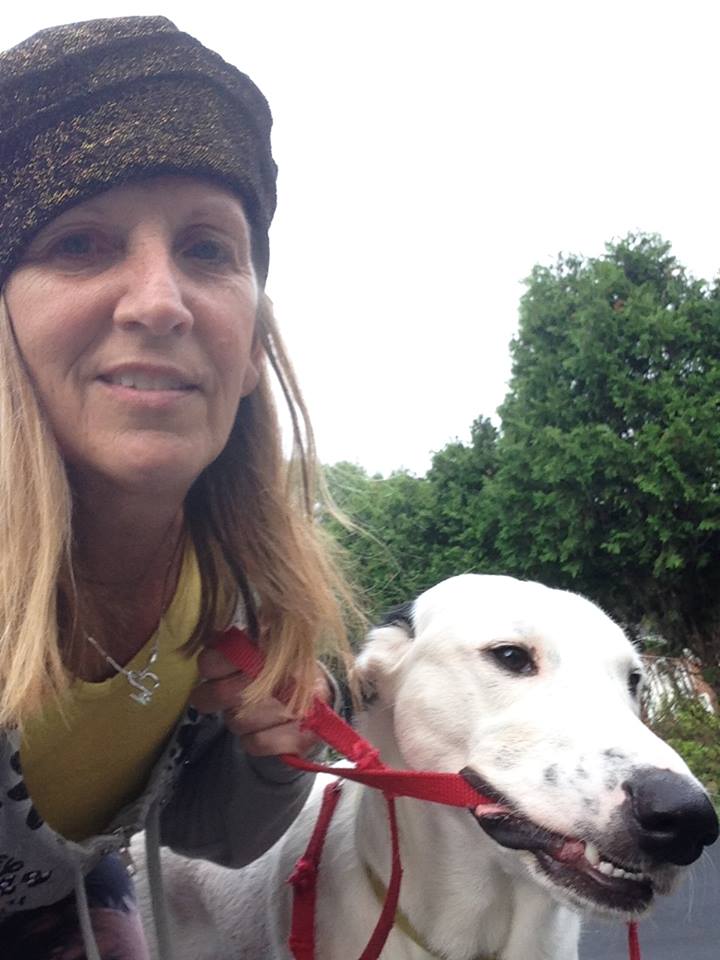
A Healthly Selfie!

11535803_10204522900928658_2672719656911963852_n

On June 11, 2015, the Obama Administration launched the “Healthy Self” campaign that represents a joint effort between the White House, the Department of Health and Human Services (HHS), including the Surgeon General, to promote healthy living (see http://www.hhs.gov/blog/2015/06/11/invest-your-healthy-self.html).

The Resource Center is committed to sharing information about community events throughout the year to educate employees about preventive actions they can take to stay healthy and well. That includes healthy eating, leading a tobacco-free and drug-free lifestyle, taking care of emotional and mental well-being, and of course – taking advantage of TRC’s offerings aimed at improving your health.

Commit to making your health a priority and join the Healthy Self campaign today, by posting a “Healthy Selfie” on social media.  It could be a shot of you working out; choosing a salad or fruit over less healthy options; bypassing the elevators to take the stairs; or heading into the doctor’s office for a checkup.  Take a selfie of anything that conveys your commitment to your healthy self, and that may motivate your friends and co-workers to follow your lead.

We all deserve to live healthy, secure lives – not just for ourselves, but for our families and loved ones as well.  Spread the word on the Healthy Self campaign, post a Healthy Selfie, and invest in your own health and well-being.  It’s an investment we can all afford to make!

For all TRC employees:  If you post a Healthy Selfie to The Resource Center’s Facebook page (or your own Facebook page), you will be entered into a drawing in which 5 individuals to receive a healthy lunch delivered to their work site.

The drawing will be held the end of June, so post your Healthy Selfie.  Send Tess (tess.kerzner@resourcecenter.org) a link to your post or a copy of your post!  The above picture is Tess’ Selfie that she posted.  Tess has committed to walking her dog, Isaac, every day for her own health and for his!  What about you?

Wellness Wednesday – Week 20

Give your ideas some legs!

You can boost your creativity at work by getting up from your desk and taking a walk instead of sitting at your desk with your writer’s block.

A study published last year in the Journal of Experimental Psychology (http://psycnet.apa.org/psycinfo/2014-14435-001/ ) demonstrated that walking can boost your creativity level.  Now is the season to head outside and practice problem solving one step at a time!  Walking opens up the free flow of ideas, and it is a simple and robust solution to the goals of boosting creativity and increasing physical activity.

Wellness Wednesday – Week 18

Are you at risk for Gynecologic Cancer?

According to an article from the Cancer Treatment Centers of America, roughly 71,500 women in the United States are diagnosed with gynecologic cancer each year.  The risk of cancer increases with age.  Endometrial/uterine cancer affects more than 52,000 women annually in the United States.

Cervical cancer tends to occur in midlife.  Most cases are found in women under the age of 50, and it is linked to human papilloma viruses.

Endometrial cancer is rare for women under the age of 45; most cases are found in women over 50.

Ovarian cancer affects up to 5% of women who have it in their family histories.  It has the highest mortality of the gynecologic cancers, killing more than 14,000 women annually in the United States.

Take Preventive Action

Make healthy choices for yourself!  Eat a well-balanced diet; maintain an active lifestyle; quit or avoid smoking; maintain a healthy weight; and follow safe sex practices.

Pay attention to your body.  Some common warning signs for ovarian cancer are abdominal bloating; indigestion or nausea; changes in appetite; feeling pressure in the pelvis or lower back; changes in bowel movements; increased abdominal girth, and feeling tired or having low energy.

Make time for an annual physical.  Educate yourself on your health history and your family’s health history.  Having close relatives on either side of the family who have had ovarian cancer increases a woman’s chance of developing ovarian cancer.

Eat Healthy
Reduce your risk for cancer by improving your diet.  New research shows that as many as one-third of all cancer deaths are linked to diet and physical activity.

You have the power to change your eating habits.
Start by reducing dietary fat intake, especially animal fat.  Make your diet rich in fruits, vegetables, nuts, beans, and whole grains.

Start small
No one can overhaul food habits quickly.  Add a few servings of fruits and vegetables to your diet each day to reduce your cancer risk.  Mix some dark, leafy greens like spinach in with your salad.  Eat a peach, or other brightly colored fruit, for a snack.

Limit alcohol
Alcohol consumption is linked to increased risk of mouth, esophagus, pharynx, larynx, liver, and breast cancers.  If you drink alcohol, men should try to drink no more than two drinks a day, and women should try to drink no more than one drink a day.

Eat less red meat and cut out processed meat
Eating too much red meat can increase your cancer risk.  Skip processed meats such as bacon, ham, pastrami, salami, sausage, hot dogs, and pepperoni.  Choose fish, poultry or beans instead of beef, pork or lamb.  When you eat meat, choose lean cuts, and eat smaller portions.  Prepare meat by baking, broiling or poaching at lower temperatures, rather than by frying in fat or broiling/grilling at excessively high temperatures.

Resource: http://preventcancer.org/prevention/reduce-cancer-risk/ways-to-reduce-risk/eat-healthy/

Wellness Wednesday – Week 17

Learn About the Safer Choice Label

EPA-Environmental Protection Agency reports a new label:

Time for Spring Cleaning?  Check out the new label for environmental safety factors for you, your home, and family.

LOOK FOR THE SAFER CHOICE LABEL.

safe choice

Finding cleaning and other products that are safer for you, your family, and the environment should be easy — that’s why the EPA developed a new “Safer Choice” label. All of us play a role in protecting our families’ health and the environment. Products with the Safer Choice label help consumers and commercial buyers identify and select products with safer chemical ingredients, without sacrificing quality or performance.

More than 2,000 products currently qualify to carry the Safer Choice label. Safer Choice products are available for your home at retail stores and for use in businesses like schools, hotels, offices, and sports venues.

For more information on products available go to :  http://www2.epa.gov/saferchoice